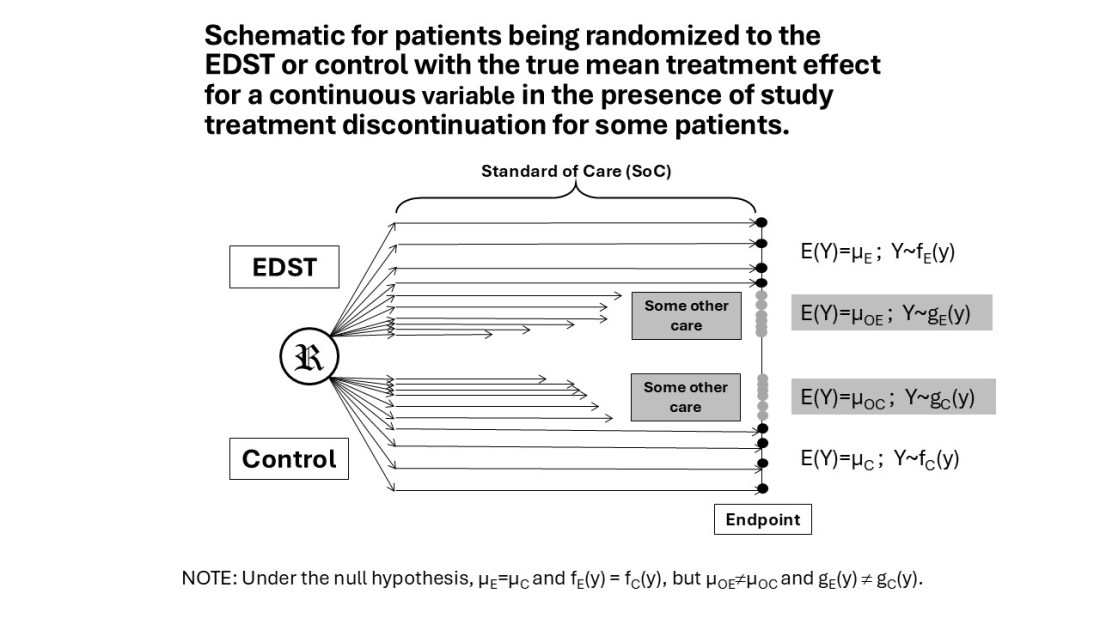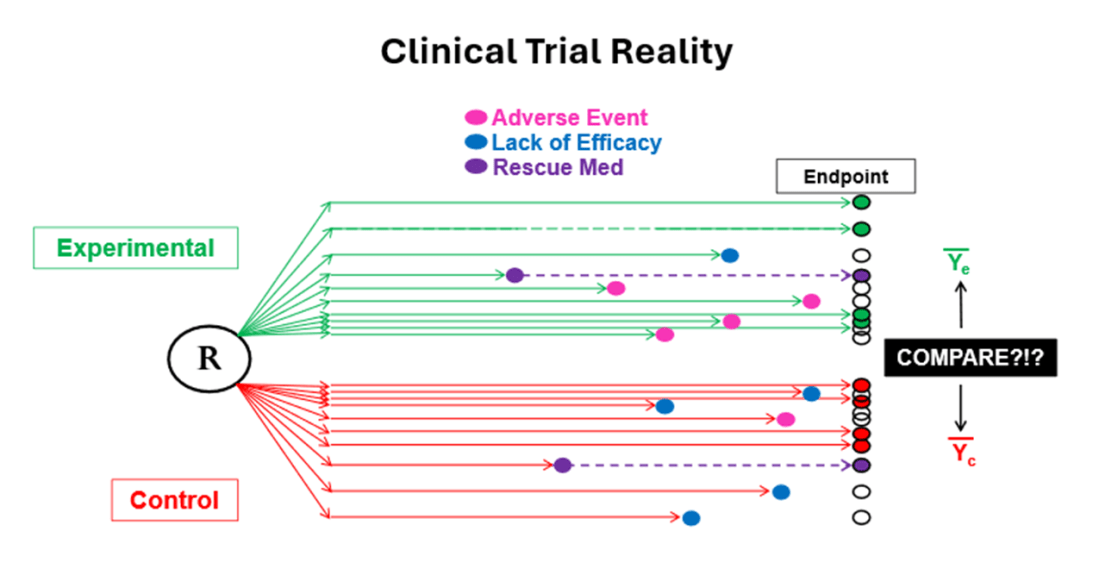
It is difficult to define the intention-to-treat (ITT) effect, and thereby the ITT estimand, since the use of the ITT approach can involve treating patients with many different treatments for many different time periods. Because of this mixture of treatment effects, the ITT approach is more of a HOW for analyzing data, than a WHAT for defining the treatment effect of interest.
Category: Uncategorized
Blog 26 – Estimands Part 3A – What Is the Question?
Even with the publication of ICVH E9(R1) and so may efforts globally for explaining and implementing the estimand framework, too often statisticians, and clinical researchers in general, focus their efforts on how to handle incomplete data, which is my term for the missing or confounded data created by so-called intercurrent events. Let’s get the focus on the clinical question of interest.
No. 25 – Estimands Part 2 – What Exactly Is an Estimand?
The word estimand has exploded into the vernacular of statistical thinking for clinical trials in the last decade or so. Where did it come from and why is it so important now?
No. 24: Estimands Part 1 – Just Do ITT?
Randomization and complete data on the randomized experimental units are needed for cause-and-effect inference. What happens when that logic is broken?
No. 16: Beware Caesar – Alcohol Consumption and Alzheimer’s Disease
Published research from respectable journals and reported by renowned press outlets can be very misleading and of questionable importance. But it helps keep funding for the researchers and readership for the news media.
No. 1: Introduction – Welcome to Analytix Thinking
Welcome to the Analytix Thinking blog! The blog that is intended to help people think rightly about data and deciding what is true. First, the intended audience is those who are analytically/quantitatively minded, but the exposition is also meant to be consumable by those who are curious about such matters, but without formal mathematical, statistical … Continue reading No. 1: Introduction – Welcome to Analytix Thinking