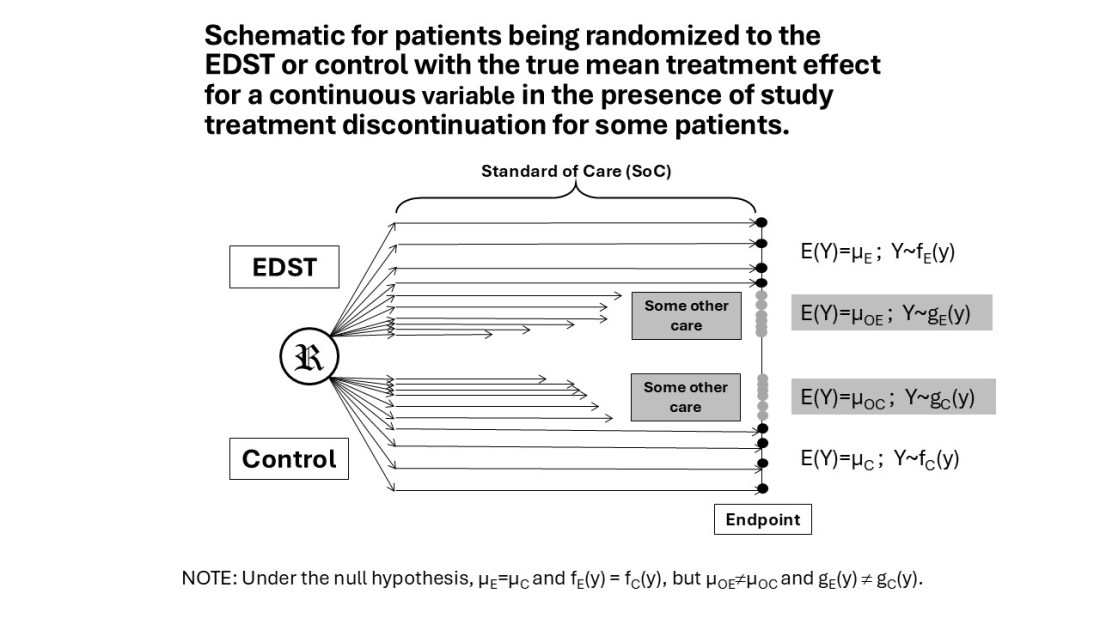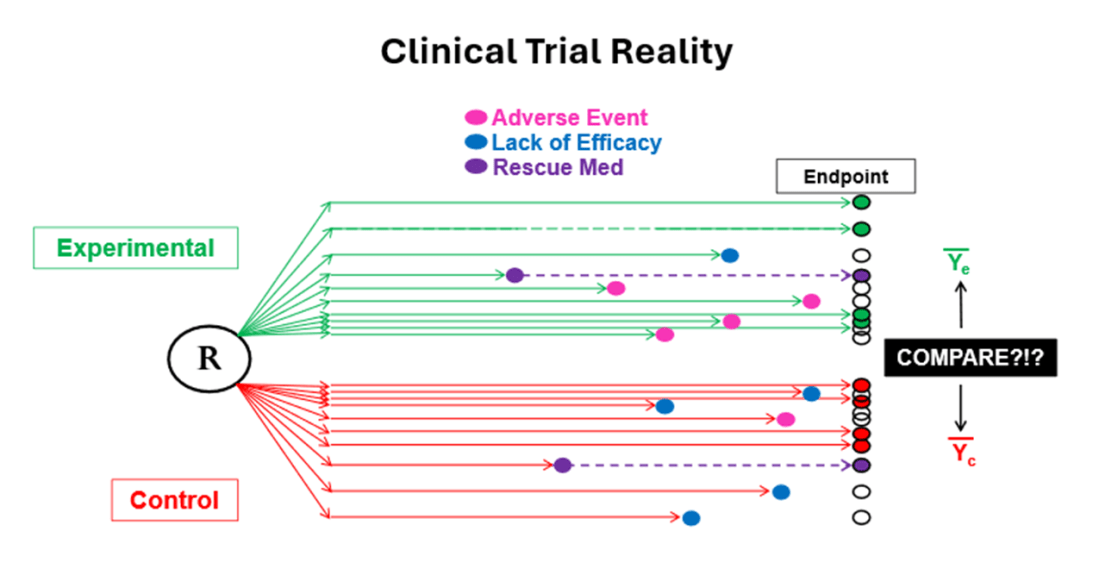
It is difficult to define the intention-to-treat (ITT) effect, and thereby the ITT estimand, since the use of the ITT approach can involve treating patients with many different treatments for many different time periods. Because of this mixture of treatment effects, the ITT approach is more of a HOW for analyzing data, than a WHAT for defining the treatment effect of interest.
Tag: science
Blog 26 – Estimands Part 3A – What Is the Question?
Even with the publication of ICVH E9(R1) and so may efforts globally for explaining and implementing the estimand framework, too often statisticians, and clinical researchers in general, focus their efforts on how to handle incomplete data, which is my term for the missing or confounded data created by so-called intercurrent events. Let’s get the focus on the clinical question of interest.
No. 24: Estimands Part 1 – Just Do ITT?
Randomization and complete data on the randomized experimental units are needed for cause-and-effect inference. What happens when that logic is broken?